
From the Shields Daily News, Sept 18th, 1865.
“One story is good ’till another is heard.” Old Proverb
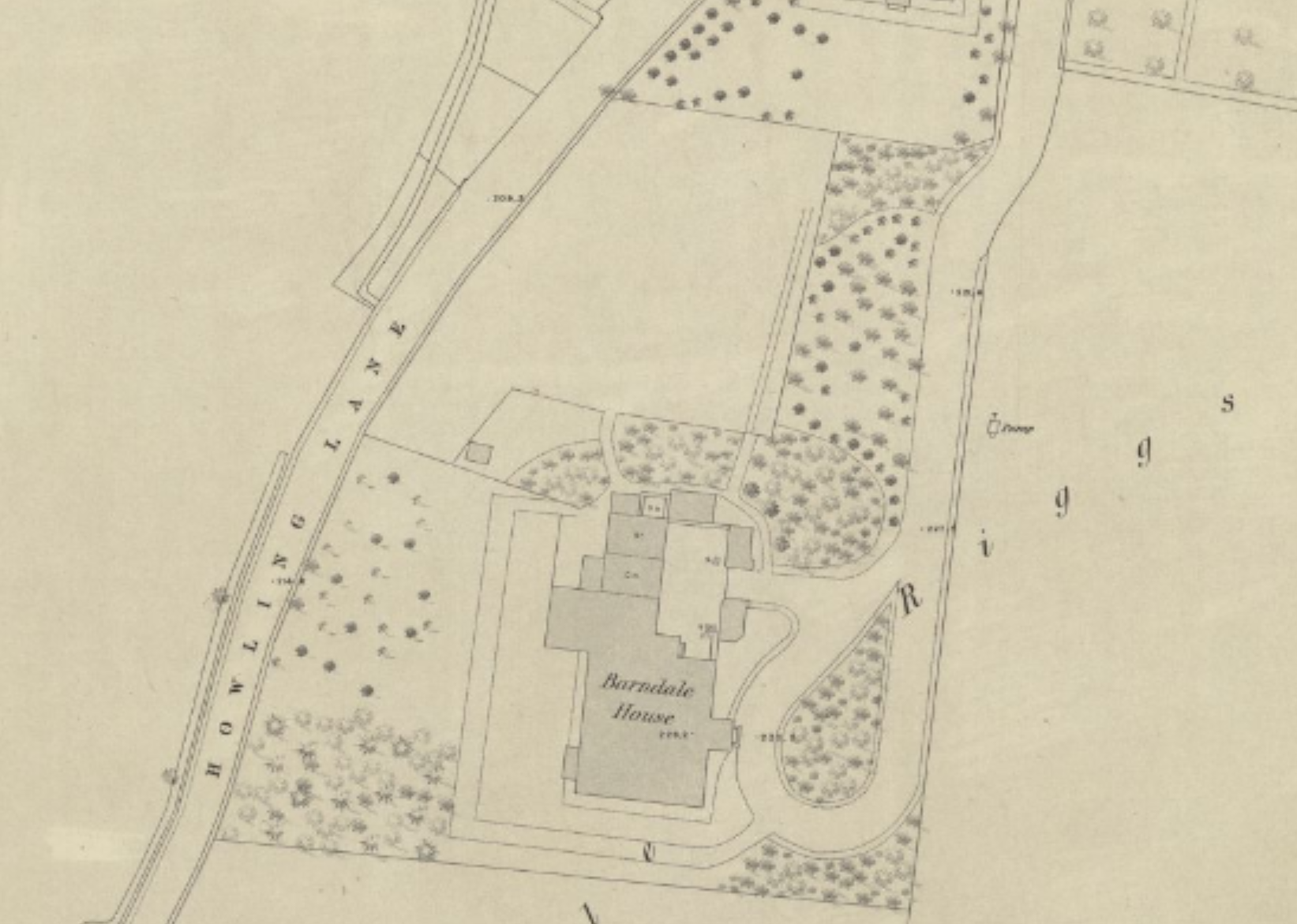
Sir,—A report having appeared in your paper of the recent robbery of grapes from the vinehouse of Hugh Lisle, Esq., J.P., of Alnwick, calculated to give your readers and the public in general an erroneous impression of what occurred on that unfortunate occasion, permit me, through the medium of your well read columns, to give a plain statement of the case made by Thomas Curry, the head gardener, and by James McGarry, his assistant, which both are willing to verify on oath if required to do so.
On Sunday morning last, the 10th inst., Curry missed apples from the trees in various parts of the garden, and also about ten or twelve bunches of the best grapes from the vinehouse; and, on the same day, gave information to the police of the burglary, believing it probable that the thieves might return and commit further depredations.
Arrangements were made with the police authorities that one of their men should be sent to watch the same evening, and who was to have access to all parts of the grounds and also to the vinery. Curry himself kept watch up to 11 o’clock, and on Monday morning he saw Police Sergeant Watson, who stated to him, that one of their men, not mentioning whom, had watched the vinery on the previous night or early on Monday morning, and “left all things right.” Curry, however, at his usual hour of entering the garden, found to his astonishment that the vinery had again been broken into, and at the same place where the thieves had entered the night previous, and as many more grapes taken away. To save, if possible, the remainder of the crop, Curry now had the vinery sashes made more secure, and then made arrangements with McGarry to watch on Monday, the next night, themselves, and dispense with the official assistance of the police, which hitherto had been productive of no good result.
Their plans, thus concerted and matured, he and McGarry went to the garden about nine o’clock, each carrying a stick with him, the better to confront danger and repel any attack that might be made upon them by returning burglars. They sat ensconced in a summer-house adjoining the vinery, and, until about a quarter past eleven o’clock saw nothing wrong or amiss, neither heard anything save the rustle of leaves disturbed by the midnight breeze as it blew through the adjoining shrubbery.
The silence which up to this time prevailed was now suddenly broken in upon, and the watchers now heard stealthy footsteps approaching in the direction of the vinery, and also the voices of two men conversing in a low and inaudible whisper, followed by a dead silence, and then an attempt to force the vinery sash, which the nocturnal visitors were unable to move, owing to the previous precautionary measures adopted to prevent further depredations.
Curry and his assistant now breathless with anxiety and excitement, but determined if possible to make a capture of the thieves, without loss of time, cautiously ascended three or four steps leading to the vinery door, and made a diligent search for the intruders, but in vain—the two men, fully alive to their critical situation, had fled from a spot no longer tenable; and to prevent further exposure had hidden themselves behind the adjacent rockery.
On approaching the place where they had thus taken timely refuge, McGarry descried,through the murky gloom and shade of the trees, one of them concealed among the rocks, and true bantam-like proving himself “good game,” made an attack upon him, and struck him on the arm with his stick. when a desperate struggle ensued, each belabouring each with stick and baton. At last McGarry sank powerless and bleeding on the rockery from a blow, accompanying a savage oath, struck by his powerful antagonist on his head, leaving a ghastly scalp wound, and his weapon wrested from him, and thrown to a distance among the trees.
Curry at the same instant hurriedly passed the two combatants in search of the second man, whom he also found concealed behind the rockery. Now a second struggle commenced between the two equally as sanguinary as the first, the man at the rockery having the worst of the onslaught, fell with his head upon one of the rocks, carrying Curry with him in his fall, and on the top of him.
This man being now vanquished and entirely in his power, Curry shouted for the assistance of a policeman, if happily one might be found, to take him into custody, but the discomfited man disrelishing such a procedure, now, and not until now, spoke, and made himself known as Police-sergeant Stewart, on which the other also came up and said he was P.C. Stevenson.
This explanation, at last, being made to the gardener, but not until Stewart and the gardener’s assistant were each severely wounded, hostilities ceased. After which the two unfortunate disabled men were removed from the garden, and placed immediately under medical treatment.
It appeared that P.S. Stewart and P.C. Stevenson. without any previous intimation being given to the gardener of their intention to do so, had entered the garden by climbing the fence, for they had no key to give them admittance by the door. The door also had been made fast by the gardener when he first began to watch. The night was cloudy and dark, for the moon had not yet risen above the horizon, nor would do so for hours to come; but these men lacked their lanterns, the usual night accompaniment of policemen on duty, and also wore plain clothes on the occasion.
Much might be said about the way our local police have acted on this occasion, the result of which might have been the death of one or more indivlduals, and much also respecting the service they render us as public functionaries paid by the community at large; but I refrain, at least for the present. to make comment on either, and have confined myself to a plain simple narration of facts. Reports of the case as suggested or dictated by the police themselves have appeared in a few of our daily prints, and the public may now “look on this picture and on that,” and through the medium thus offered them make their own deduction, leaving me in the interim to subscribe myself…
A Iover of fairplay and justice, Alnwick, September 15.
Notes:
Hugh Lisle (1793-1877). Originally Hugh Moises of Felton took the surname of his wealthy wife when they married. He was a leading magistrate in Alnwick, and lived at Barndale. https://bailiffgatecollections.co.uk/gallery/alnwick-victorians-61/
More on Barndale: https://alnwickcivicsociety.org.uk/2021/07/27/b-is-for-barndale-and-barresdale/
 Alnwick Civic Society